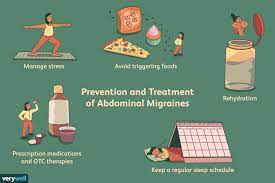
How is abdominal migraine similar to a migraine (or migraine headache)? Abdominal migraine and migraine share similar triggers, such as stress, skipping meals, exposure to bright light, and poor sleep. Foods containing chocolate, caffeine, and monosodium glutamate (MSG) are also triggers.
Symptoms and Causes
What are the symptoms of abdominal migraine?
The main symptom of an abdominal migraine episode is abdominal (belly) pain. The pain is usually in the middle of your belly around your belly button. It may feel like a dull ache or soreness and can be moderate or severe.
The episodes usually start suddenly and end abruptly. They can last between one and 72 hours.
Other symptoms that you or your child may experience during an episode include:
- A pale appearance (pallor).
- Loss of appetite.
- Nausea.
- Vomiting.
- Headache.
Some people may experience other migraine symptoms, like light sensitivity (photophobia) and noise sensitivity (phonophobia).
The time between episodes can range from weeks to months. People typically don’t have symptoms in between episodes.
What causes abdominal migraines?
Researchers don’t know yet what causes abdominal migraines, but they have a few hypotheses.
The main hypothesis is that people who experience abdominal migraine have overly sensitive nervous systems — specifically the primary sensory and central spinal neurons in this system. Researchers think that certain genetic, psychosocial and environmental factors may make someone vulnerable to this hypersensitivity.
When a person experiences certain triggers (such as motion sickness or stress), their body abnormally releases neurotransmitters (chemical messengers). One neurotransmitter in particular, serotonin, may contribute to abdominal pain.
What triggers abdominal migraines?
Certain situations may trigger episodes of abdominal migraine. These can vary from person to person.
Common triggers include:
- Stress, such as from school or family life.
- Poor sleep and irregular sleep habits.
- Prolonged fasting.
- Dehydration.
- Travel and motion sickness.
- Exercise.
- High-amine foods, such as citrus fruits, chocolate, cheese, salami and ham.
- Foods with additive flavoring, coloring and monosodium glutamate (MSG).
- Flashing lights.
- Consuming over 200 milligrams of caffeine.
Here is an excellent site for abdominal migraine.